For professionals
The benefits of exercising during cancer treatment
Why is exercise important before, during and after cancer treatment?
The benefits of exercise in relation to cancer outcomes is becoming increasingly recognised. Working closely with patients’ clinical teams, Active Against Cancer staff create a personalised exercise programme that is safe, effective and appropriate for each individual. Physical activity is supported by access to psychological support and nutritional expertise.

Preparing as thoroughly as possible before commencing cancer treatment can greatly enhance patients’ ability to handle the process and ultimately improve their long-term health outcomes. The graph demonstrates how prehabilitation exercise can lead to a faster recovery, reduce the effect of complications and reduce the dependency period.
What is Active Against Cancer
Active Against Cancer is an NHS-funded service which supports patients with a cancer diagnosis in the Harrogate district. Following a referral, we conduct a detailed clinical assessment – taking into account medical history and clinical needs – to offer a personalised, individual exercise programme. Each patient is reassessed before and after new treatment and at 3 and 6-month rehabilitation stages.
Through offering personalised care, we are better able to meet the needs of individual patients, giving them the opportunity to make sustainable changes to their health and wellbeing, before and after their cancer treatment. Taking part in the Active Against Cancer programme contributes to improved clinical outcomes and a better quality of life.
Why refer your patient?
- Optimise their health before surgery.
- Improve responses to treatment.
- A quicker return to their pre-treatment fitness.
- Reduce likelihood of post-surgery complications.
- Enable them to play an active role in their cancer care.
- Improve general fitness, health and wellbeing.
- Reduce risk of cancer recurrence.
- Provide personalised, tailored care.
How to access the service
If your patient is over 18 and has had a cancer diagnosis, a cancer-related hospital admission, or received chemotherapy, radiotherapy or immunotherapy within the last 12 months they are eligible to join Active Against Cancer. If your patient anticipates having surgery or starting chemotherapy, radiotherapy or immunotherapy for cancer within the next 3 months they are also eligible.
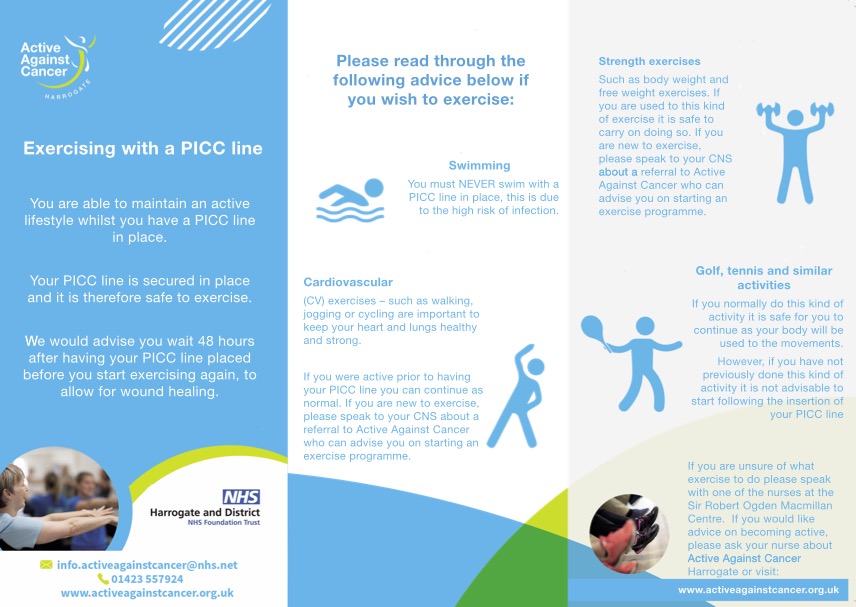
Exercising with a PICC line
Download and read our leaflet for guidance about how to exercise with a PICC line.
Exercising with a stoma
Exercising following stoma formation can, for a lot of patients, be a source of anxiety and as a result they often become less active. In research published by Russell (2017) >56% of patients self-reported being much less active than they were before their surgery. Similar findings by Beeken et al (2019) found that 56% of patients felt their physical activity levels were worse after stoma formation.
It appears that most people living with a stoma are also less active than the general population too. It is therefore vital that we support our patients to return to activity from activities of daily living through to return to sport. At present there are no formal guidelines and information found online can often be confusing and contradictory.
The guide found under Exercise at home – abdominal rehabilitation has been designed using advice taken from Sarah Russell’s book “The Bowel Cancer Recovery Toolkit” and clinical expertise.
If you require any further support in using the guide please contact the service info.activeagainstcancer@nhs.net.
Further information
The following are links to websites that provide further supporting information.